
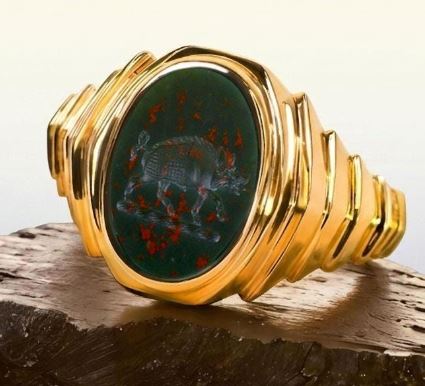
Carving Signet Ring is an artisanal and highly personalized piece of statement jewelry featuring a flat-topped metal or gemstone face that has been meticulously engraved by hand or precision tools to display a custom emblem, monogram, or historical crest. For thousands of years, these specialized rings served as the ultimate symbol of power, authenticity, and personal identity, utilized by monarchs and aristocrats to stamp their unique seals into molten wax on state documents. In today’s contemporary fashion landscape, the art of the carved signet ring has experienced a massive cultural revival. It stands as a profound rejection of mass-produced, fast-fashion accessories, offering discerning individuals a way to wear a piece of bespoke fine art that tells their own personal story or honors their ancestral roots.
The Timeless Artistry and History of Carved Signets
The tradition of carving emblems into rings dates back to ancient Mesopotamia and Egypt, where pharaohs wore heavy gold bands carved with sacred scarabs and hieroglyphics. By the Middle Ages, the craft had evolved into a sophisticated discipline of heraldry. Master goldsmiths would spend weeks meticulously carving a family’s coat of arms into solid gold or hard gemstones. The precision required was extraordinary, as many rings were carved in reverse (intaglio) so that the resulting wax impression would read correctly.
In the modern era, the purpose of the carving has shifted from legal authentication to personal expression. While many people still choose to carve their traditional family crest, others use the flat canvas of the ring to commemorate personal milestones, professional achievements, or spiritual symbols. A beautifully carved ring acts as a wearable trademark—a subtle yet commanding declaration of who you are, built to develop a rich patina and character as it ages with you.
Key Considerations When Designing Your Carved Ring
Creating a custom carved signet ring requires careful planning around materials, shapes, and techniques to match your daily lifestyle and style preferences:
- Metal Options: High-quality precious metals are essential for ensuring the longevity of the engraving. Solid 14k or 18k yellow gold offers a classic, royal warmth that mirrors historical museum pieces. For an understated, contemporary look, sterling silver, white gold, or platinum provide a sleek, high-contrast background that makes the carved lines stand out sharply.
- The Shape of the Face: The silhouette of the ring’s face sets its design tone. An oval face is the most traditional option, offering an elegant framework for complex crests. A cushion shape (a square with softly rounded corners) gives off a robust, vintage aesthetic, while a round or oxford face delivers a clean, modern, and minimalist vibe.
- Carving Techniques: Scribes and jewelers generally utilize two main methods today. Hand engraving is a traditional, centuries-old art form where a master craftsman uses a sharp tool called a graver to physically push and carve the metal away, leaving bright, deep, and unique organic cuts. Laser engraving utilizes modern technology to burn the design onto the metal with flawless, mathematical precision, making it ideal for highly intricate modern graphics.
Frequently Asked Questions About Carving Signet Rings
To help guide you through the process of selecting, customizing, and caring for your heritage jewelry, we have compiled and answered the most common questions:
1. What kind of designs can be carved onto a signet ring?
Answer: There are absolutely no limitations to what can be carved onto your ring. Classic choices include traditional family crests, historical coats of arms, or stylized three-letter monograms. Modern wearers, however, frequently request custom contemporary symbols, such as astronomical constellations, corporate logos, initials in bold modern fonts, or symbolic animals like a lion for courage, an eagle for freedom, or an anchor for stability.
2. Which finger is traditionally reserved for a carved signet ring?
Answer: Historically, British and European traditions dictate that a signet ring should be worn on the pinky finger of the non-dominant hand. This placement made it physically effortless for a gentleman or noble to quickly stamp a wax document on their desk. In modern fashion, however, these rigid rules no longer apply. You can confidently wear a carved signet ring on your ring finger, middle finger, or even your index finger based purely on personal comfort and style.
3. Will daily wear rub away or damage the carving over time?
Answer: If the ring is carved deeply into high-quality precious metals like solid gold or platinum, the core design will easily last for generations. However, because precious metals are naturally malleable, daily wear will introduce microscopic scratches and soft dents. This is not considered damage; rather, it creates a highly sought-after, vintage finish known as a patina, which actually enhances the depth and character of the carving.
4. How should I clean and maintain an engraved ring?
Answer: Because carved designs feature recessed lines where hand lotions, dust, and natural skin oils can pool, regular maintenance keeps the carving crisp. Soak your ring in a bowl of warm water mixed with a few drops of mild dish soap for ten minutes. Then, use a very soft-bristled toothbrush to gently scrub the engraved crevices. Rinse thoroughly under clean water and dry with a soft microfiber cloth.
Investing in a custom carved ring is a beautiful way to celebrate your individual identity and ensure your story is carried forward to future generations. Whether you are searching for a heavy gold signet featuring a hand-engraved family shield, a modern silver monogram ring for everyday styling, or a unique heirloom gift to mark a significant life transition, choosing the highest tier of artistry is paramount. You can easily explore our premium selection of Carving Signet Ring products and similar custom heritage jewelry on our website, where you can find the perfect design to express your unique identity.