
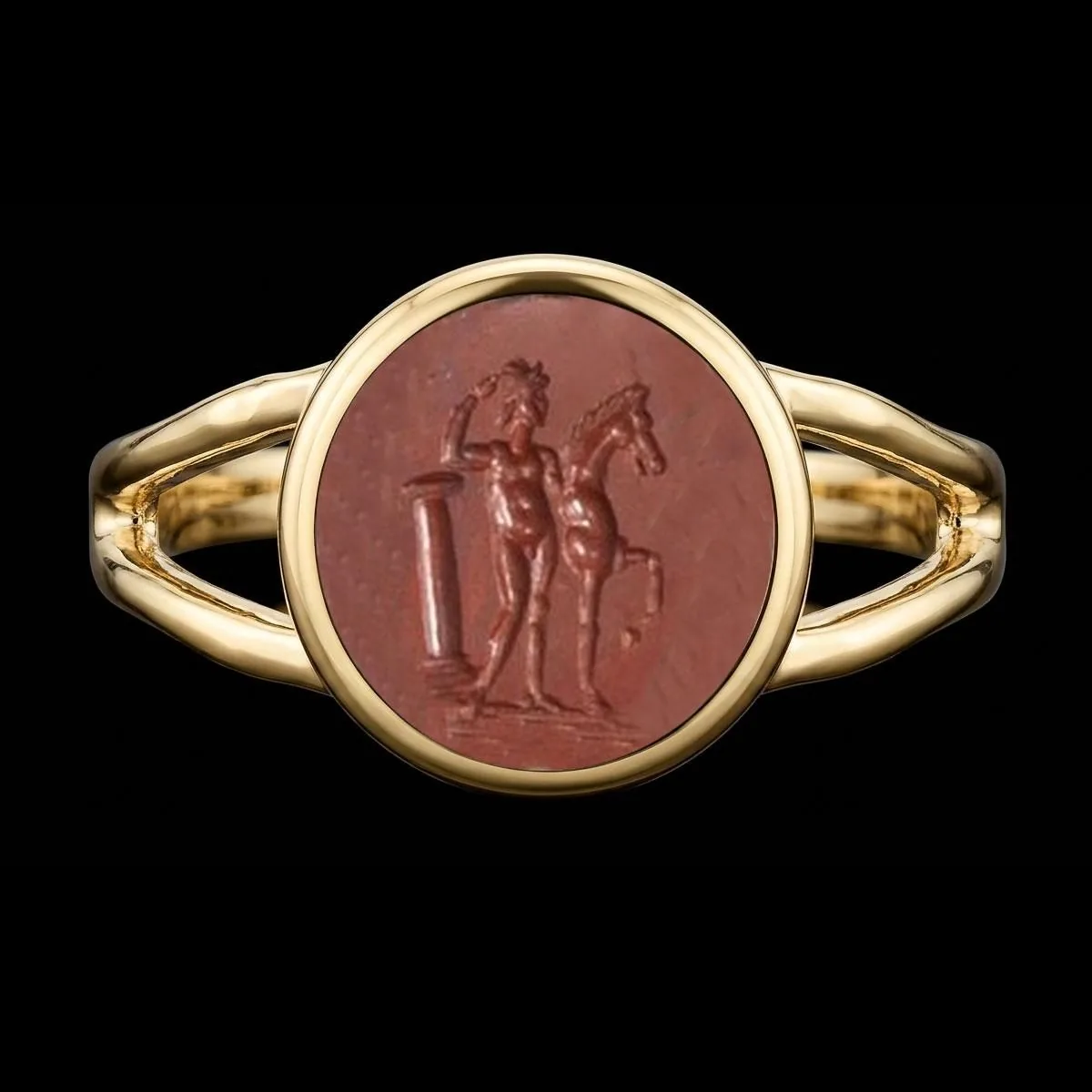
Vintage Gold Signet Ring pieces are authentic heirloom or antique-inspired bands forged from high-karat gold alloys—typically produced at least twenty to one hundred years old—that feature a prominent flat or gently domed top face decorated with personalized monograms, heraldic crests, family seals, or inlaid gemstones. Historically utilized by nobility, aristocrats, and civic leaders as functional wax seals to validate important documents, these remarkable gold treasures have transcended their administrative origin to become timeless symbols of personal prestige, heritage, and refined style. Combining the warm, enduring luster of vintage gold with the distinctive artistic signatures of eras like the Victorian, Edwardian, Art Deco, and Retro periods, a gold signet ring offers a rich blend of history, solid craftsmanship, and individual character.
The Masterful Eras of Gold Signet Design
Understanding how goldsmiths across different historical movements approached signet ring design highlights the extraordinary artistic diversity available to modern collectors:
-
Victorian Era (1837–1901): Victorian goldsmiths favored rich 15k and 18k yellow gold, as well as warm rose gold alloys. These signets featured intricate hand-carved floral borders, serpent motifs (representing eternity), and deep intaglios carved into hardstones like bloodstone, sardonyx, carnelian, and black onyx.
-
Edwardian Era (1901–1915): Marked by aristocratic grace, Edwardian gold signet bands often incorporated subtle platinum detailing, fine milgrain borders, and lace-like filigree around the gallery, featuring monograms hand-carved in delicate cursive script.
-
Art Deco Era (1920–1935): Embracing industrial geometry and architectural precision, Art Deco gold signets featured octagonal, square, or shield-shaped faces. Designers frequently paired crisp yellow or white gold with contrasting black onyx, lapis lazuli, or mother-of-pearl backdrops set with accent diamonds.
-
Retro & Mid-Century Eras (1930s–1970s): Bold, sculptural, and expressive, mid-century gold signets celebrated heavy gold weight, textured “bark” or hand-brushed metal finishes, and flush-set focal diamonds or star sapphires.
Why Choose a Vintage Gold Signet Ring?
Selecting a genuine estate gold signet ring over a modern off-the-shelf band offers several distinct advantages:
-
Unrivaled Hand-Engraved Craftsmanship: Historical gold signet rings were individually hand-chased and deep-engraved by master goldsmiths without computerized tools. The dimensional depth, sharpness, and human touch of antique hand-engraving cannot be replicated by modern lasers.
-
Rich Patina and Warm Surface Texture: Decades of gentle wear impart a soft, glowing surface luster known as patina onto the gold. This subtle texture softens the harsh glare of freshly minted gold, giving the metal a rich, warm, and sophisticated depth.
-
Sustainable and Ethical Luxury: Purchasing pre-loved estate jewelry is the ultimate expression of eco-friendly luxury. By choosing an existing historic treasure, you eliminate the environmental impact and resource demand associated with modern gold mining and industrial manufacturing.
Frequently Asked Questions About Vintage Gold Signet Rings
Navigating the estate market for historic gold signet rings requires understanding key mechanical and style details. Here are detailed answers to the questions prospective buyers ask most frequently:
1. On which finger is a vintage gold signet ring traditionally worn, and how is it styled today?
Answer: Traditionally, signet rings were worn on the pinky finger of the non-dominant hand, allowing the wearer to press their gold seal into warm sealing wax smoothly. Today, however, gold signet rings are styled with complete personal freedom. They look exceptionally distinguished worn on the pinky, index, or middle finger as a standalone statement piece, or stacked alongside delicate gold bands.
2. Can a vintage gold signet ring with existing historical initials be re-engraved?
Answer: Yes. If the gold top face is solid and sufficiently thick, an experienced bench jeweler specializing in antique restoration can carefully buff away the old worn monogram and hand-carve your own custom initials, crest, or personal symbol. Alternatively, many wearers choose to preserve the original historic engraving as an authentic tribute to the ring’s unique provenance.
3. Can a vintage gold signet ring be safely resized?
Answer: In most cases, yes. Solid 10k, 14k, or 18k gold signet rings with plain rear shanks can easily be resized by a skilled jeweler. However, if the ring features hand-carved pattern work or texturing extending around the entire circumference of the band, resizing requires expert evaluation to avoid disrupting the historic pattern.
4. How should I properly clean and care for an antique gold signet ring?
Answer: Maintenance is simple and safe. Clean your gold signet ring in warm water mixed with a few drops of mild dish soap, using an ultra-soft toothbrush to gently clear debris out of engraved grooves or behind stone settings. Avoid harsh chemical cleaners, abrasive polishing cloths, or ultrasonic machines, as these can strip away the desirable historic patina.
Whether you are seeking a sleek Art Deco onyx band, a Victorian gold heraldic ring, or a heavy mid-century engraved signet to establish your personal signature style, an authentic historical ring offers an enduring narrative of strength, elegance, and heritage. To explore our handpicked collection of certified estate pieces, discover rare designs from every iconic era, and purchase exquisite Vintage Gold Signet Ring options, visit the dedicated pages on our website today.